Book Review VII: The Once and Future Roman Rite
Understanding Vatican II and the Councilism's reproach for the Mass of Ages
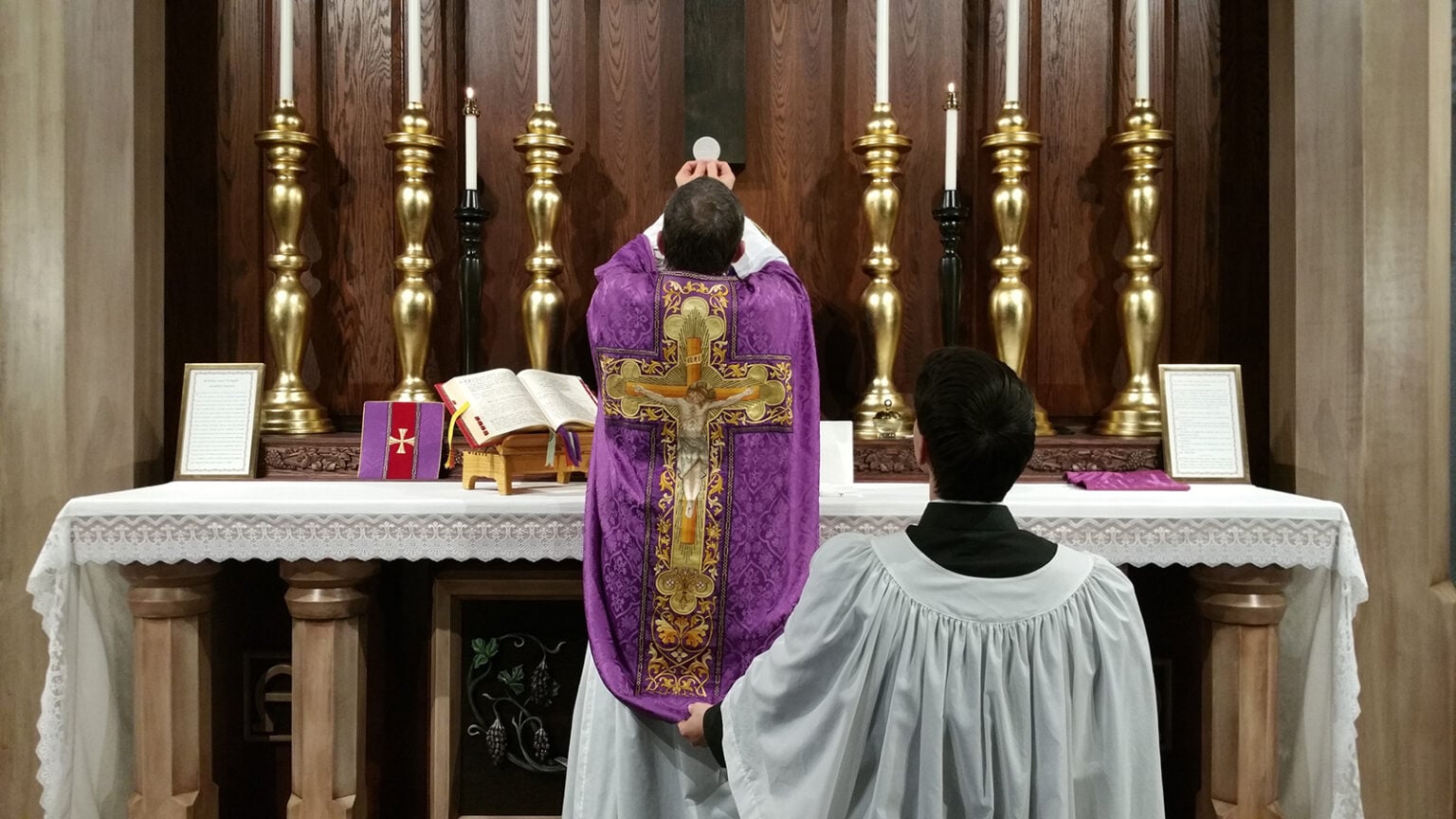
I first encountered Dr. Peter Kwasniewski when giving an interview on Mass of Ages. In the interview, Kwasniewski lays out exactly what the Latin Mass is and how it came about, particularly in the context of Vatican II and the post-Conciliar changes which tore apart the beauty, the serenity and the purity of the Roman Rite.
In recent years, the Latin Mass has caused immense controversy amongst modernists since (1) the traditional catholic communities are growing while the Novus Ordo communities are drastically dying and (2) the Latin Mass has found it's most gracious proponents to be that of the young, those in the '86 generation simply do not understand.
In the words of Dom Alcuin Reid:
"Young people, young families, young adults, find here the source and summit of their Christian life and mission. They find here what the Second Vatican Council wanted them to find in the liturgy. This is slightly ironic in one sense...Those of us who live the traditional liturgy or who participate regularly in celebrations of it, see the true conscious, active and fruitful participation of people just as the Council desired. The rite hasn't changed, but the level of participation and engagement, the empowerment that these people find for Christian life and mission, the heroic witness of so many young Catholic families attached to the Traditional Liturgy, in having many children and bringing them up in a secular world according to Catholic doctrine and life... These people are not fomenting division in the Church, they are not creating a sect, they're getting on with the business of bringing Christ into their families and into the world. And they're a powerful witness."
Kwasniewski breaks down exactly how we got to this self-indulging and self-destructive point in the Church as well as establishes the foundations for genuine worship that is laid out in tradition.
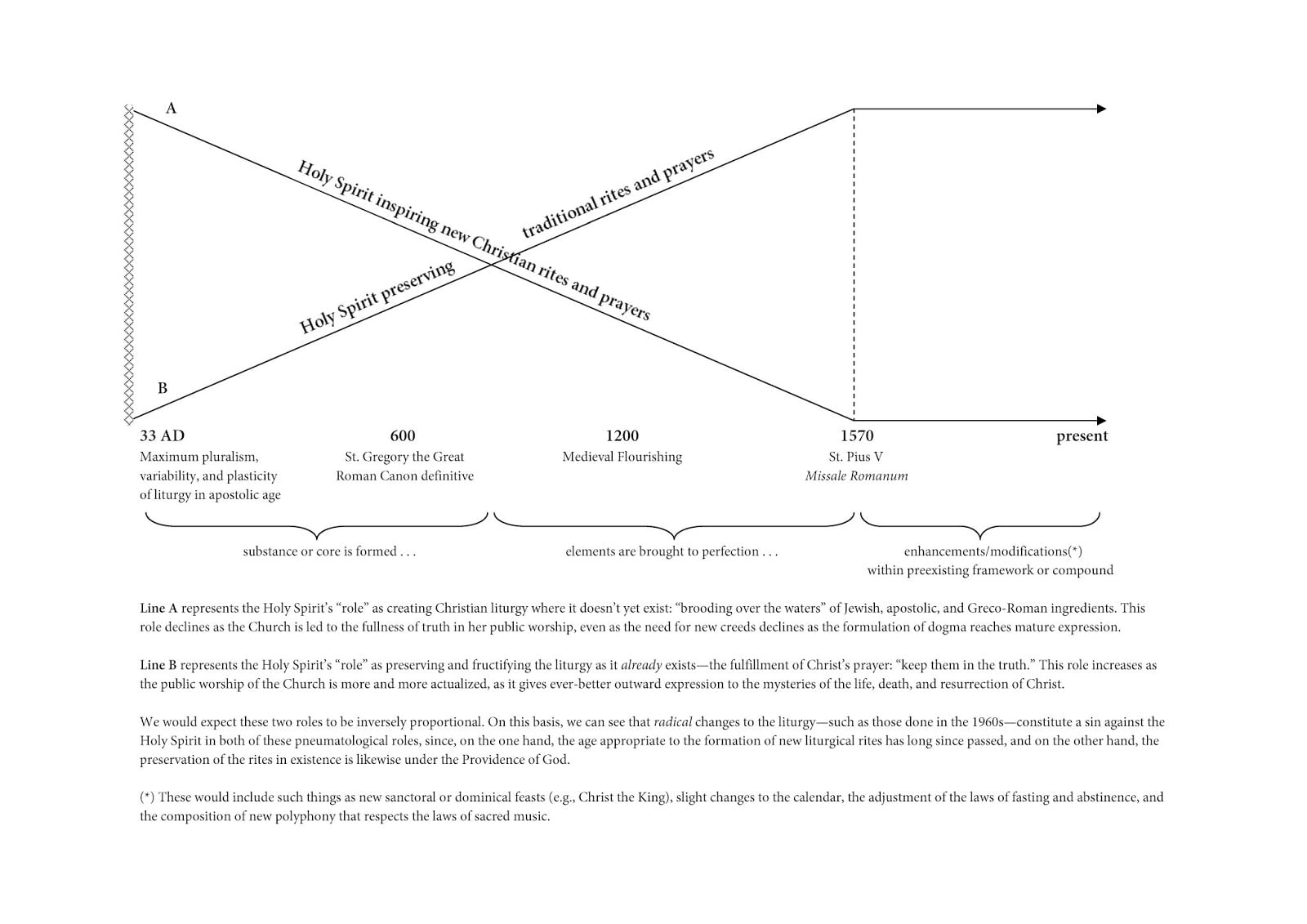
One of the most damming perspectives that puts shame to the entire Novus Ordo enterprise is that The Mass is guided by the Holy Spirit*,* as shown in John 16:13 when Christ says
But when He, the Spirit of truth, comes, He will guide you into all the truth. He will not speak on his own; He will speak only what He hears, and He will tell you what is yet to come.
Therefore, any drastic or sudden changes, restrictions, admissions, abandonments and mutilations is undoubtedly against the Holy Spirit and His guiding power, even if instituted by a Pope.
The Once and Future Roman Rite is a must-read for Catholics who have been newly introduced to the Roman Rite. When one hears of the Vatican instituting restrictions on the Latin Mass, when one hears scoffs and pompous remarks by the Novus Ordo against Latin Mass communities, when one sees the liturgical abuses and ill-will of modernist reformers - anger is the only feeling that comes to mind.
Perhaps anger is necessary. It is difficult to comprehend that this beauty of tradition was so hastily and unanimously thrown out, and replaced by something so dull and impersonal. I hope that this information will be part of the understanding Catholics can receive for how to truly worship God.
One thing became clear to me: the liturgical catastrophe wasn’t just the work of presumptuous prelates who threw together with suspicious haste a protestantizing worship service. Rather, it was preceded by a lack of understanding that had grown up over many decades.
We are just beginning to see the Catholic renaissance, even while the rest of the modern Western world rushes at a mad pace to populate the circles of hell.
Glorifying God and sanctifying our souls cannot be divorced from the fittingness of the worship we offer Him.
Our clothing is metaphysically extrinsic to us, but for all that, we are not nudists: our clothing is an extension of our humanity, a manifestation of our personality. We need not go so far as to say “the clothing makes the man,” but without a doubt it presents the man, typifies him, readies him for one task and not another, and also disguises or hides or shields him.
dominical tradition is like the soul, divino-apostolic tradition is like the body, and the remaining two (humano-apostolic and ecclesiastical) are like the clothing worn over the body. All three come together to “make the man.”
Augustine once wrote: “God who created you without you, will not save you without you.”
These antiphons and orations cover, with total honesty and integrity, the whole of Christian doctrine and belief, not sweeping any uncomfortable matters under the carpet. In this way the liturgy will speak often of human frailty, sinfulness, concupiscence, our need for divine grace in order to be saved, the danger of damnation, our need to resist demons and infidels, our calling to convert pagans, the evil of heresy and schism, the good of fasting, abstinence, and chastity, the primacy of heavenly and spiritual goods over temporal and earthly ones, the kingship of Christ over states and societies, and other such themes—all of which are prominent in the traditional Roman missal.
In authentic Christian worship, one must offer the holy sacrifice facing liturgical east; one must use a fixed anaphora; one must carry out an oblative offertory and signify unambiguously one’s intention to offer the divine victim; one must handle, consume, and distribute the Blessed Sacrament with utmost veneration, observing ontological distinctions between clergy and non-clergy and between men and women; one must respect the mutual parallelism of liturgy, theology, and architecture; and one must say or sing the antiphons, orations, and readings dictated by the rite, which together constitute a mature and rich expression of dogma and devotion.
if there was any Eucharistic liturgy that did not embody all eight of these elements—or that need not embody any one of them—it would stand in violation of the Vincentian canon and would not be a Eucharistic liturgy in the full and proper sense of the term. It would be a prayer service or paraliturgy with a consecration inserted into it.
Speaking more broadly, the Novus Ordo encapsulates the errors of modern philosophy: in its prejudice against the universal anthropological language of symbols, its inescapable optionitis, its monotonous verbosity aimed at immediate comprehension, its rubrical sparseness and vagueness, and the veritable Tower of Babel created by vernacular missals, it shows itself to be characterized by nominalism, voluntarism, rationalism, and relativism.
Martin Luther was an early proponent of versus populum celebration, which fit in with his non-sacrificial notion of the Mass: “Let all the vestments, the altar, the candles be, until they get used up, or we decide to change them. And if somebody wants to do things differently, let him do it. But for the real Mass among true Christians, the altar should not remain in its current form and the priest should always face the people—as we can undoubtedly assume Christ did during the Last Supper. Well, all this will come to pass in time.”
Because its architects were working under the influence of mid-twentieth-century theories of Christ’s presence in the congregation and in the liturgy as a whole—truths that deserve recognition, but not at the expense of the unique personal and substantial presence of Our Lord in the Holy Eucharist—the resulting Novus Ordo may be called the first “non-Eucharistic-centric” liturgy, in the sense of a liturgy that is not manifestly centered on the Real Presence of Christ under the species of bread and wine.
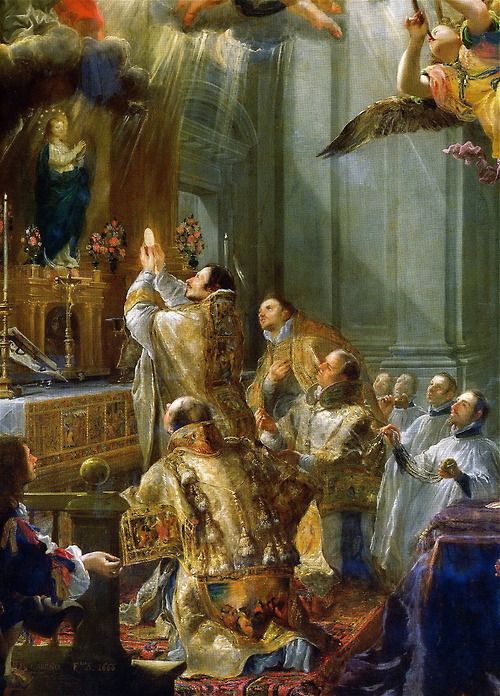
The Novus Ordo is stubbornly horizontal in its manner of practice: the hierarchical offices are either canceled out or confused, the distinction between clergy and laity is blurred, the roles of men and women are mingled in a way only conceivable after the Sexual Revolution, and instead of the verticality of simultaneous action directed to God, there is linear, modular, sequential liturgy in service of audience-oriented rationalism.
Apart from simple dialogues, the chant is contemplative music offered up to God, while the reformed rite calls for music “of the people, by the people, for the people.”
The orations of the Novus Ordo are notoriously dumbed down and edited for political correctness: they rarely use military imagery, for example, and go out of their way to avoid talking of human weakness, pressing dangers, trials and adversities, the captivity of sin, wounds caused by sin, offending God’s majesty, remorse, reparation, penance, enemies of Christ and of the Cross, God’s rights over men and nations, the merits of saints, miracles, apparitions, and the four last things.
The liturgical modernist or modern liturgist thinks that the historical development of liturgy is not included in the scope of Divine Providence or the Holy Spirit’s work of leading the Church into the fullness of truth; it is not a teleological process that culminates in maturity. It was never anything other than pure convention, something thrown together by a group of people at a particular time—nothing but “the work of human hands,” assembled by a committee of experts and animated by a pope’s command.
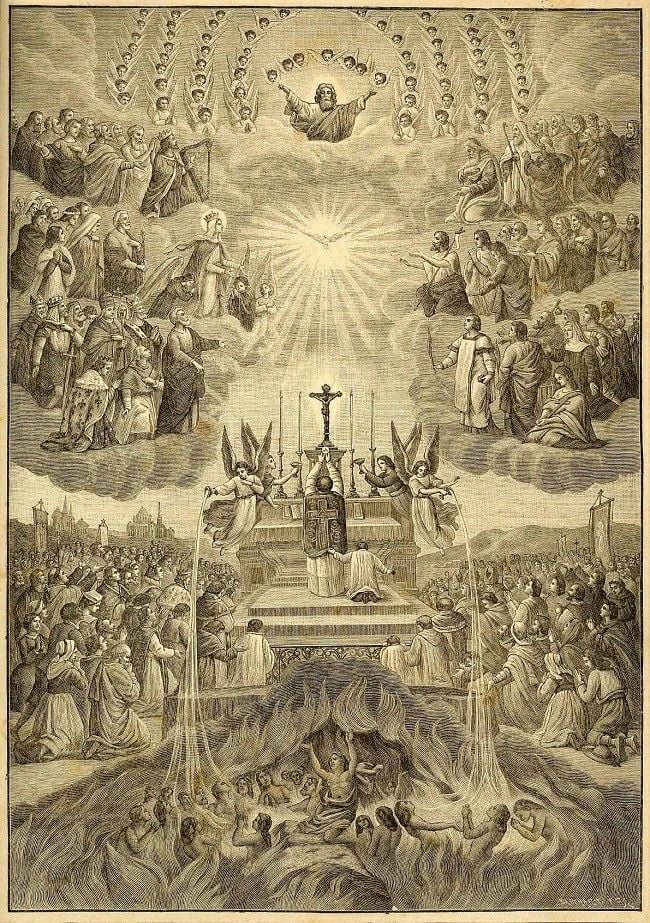
“The ritual setting of that central act is guaranteed… . It is the Spirit of God Himself who has moved throughout the centuries of our history and fashioned for us this liturgy, which therefore bears the weight not only of our beliefs but of that Christian history itself… . Our Western Mass enshrines and brings to us alive, as it were, the passage of Christ through the lands where our own civilisation, our own ways of thought and expression, were fostered and matured.”
The Holy Spirit takes countermeasures, so to speak, against the decrease of the connatural apostolic knowledge of divine truth (one thinks of Saint Paul’s “there must be heresies”
The Holy Spirit takes countermeasures, so to speak, against the decrease of the connatural apostolic knowledge of divine truth (one thinks of Saint Paul’s “there must be heresies”46) by ensconcing certain doctrinal propositions and liturgical rites across history as concrete parameters for faith and worship, like the inescapable givenness of Christ’s physical Body during His earthly life, or the continued presence of His Mystical Body on earth. Just as God revealed to Moses the exact pattern of the tabernacle he was to build,47 so too the Son of God fulfilled all the prophetic types in offering His own sacrifice as the perfection of worship— nothing was left to chance; every detail was deliberate and controlled.
It is seen as a blessing from the Lord, who, having raised up century after century of saints to enhance and enrich the liturgy, now seals it with His sovereign blessing, imparting to it a share in His own immutability and eternity.
The philosopher Émile-Auguste Chartier wrote: “It does not surprise me that the Church dreads change of even the slightest sort. Long experience has shown her that true peace of soul presupposes unhesitating prayer on the lips, and this in turn means that things are always said in the same way.”
Paul Claudel echoed him: Men of small and superficial spiritual understanding, heretics, and modernists, are forever itching to get their hands on things, to change everything, to radically reorder everything. The Church for her part remains attached to the unchanging order of her doctrine and her ceremonies, seeing, in the words of Genesis, that these things are not only good but very good. In her psalms and hymns, in every morning’s Mass, in the great poem of the liturgy—at once both a dramatic action and a chorus, which stretches out through the whole year—the souls of the faithful, thirsting for love and for beauty, constantly find the living satisfaction of their desire, as also their fathers did before them. Such a mentality was once universal, even taken for granted among Christians, in the West and in the East.
They did not chafe at the bonds of inferiority or push toward a forced originality but rejoiced in having received the sort of gift that no nation can demand or even expect.
The liturgy in its diachronic totality—a treasure of great perfection and beauty, a living reality born of the Holy Ghost in the womb of the bridal Church—was lovingly kept and handed down by the ordering of Divine Providence, which no pope dared disturb or oppose.
it follows that no one may repudiate what the liturgy has been for long stretches of the Church’s history without sinning against the Holy Spirit.61 Papal authority cannot be legitimately exercised to the detriment or the destruction of that which the Holy Spirit has raised up; such an exercise would be an abuse of office.
Canon 13 of the Seventh Session of the Council of Trent: “If anyone says that the received and approved rites of the Catholic Church that are customarily used in the solemn administration of the sacraments can be looked down on, or that ministers can without sin omit them according to their own whim, or that any pastor of churches whatsoever can change them into other new ones, let him be anathema.”
“The Sacrifice is celebrated with many solemn rites and ceremonies, none of which should be deemed useless or superfluous. On the contrary, all of them tend to display the majesty of this august Sacrifice and to excite the faithful, when beholding these saving mysteries, to contemplate the divine things which lie concealed in the Eucharistic Sacrifice.”
published in 1566, three years after the Council of Trent was concluded, says this about the Mass: “The Sacrifice is celebrated with many solemn rites and ceremonies, none of which should be deemed useless or superfluous. On the contrary, all of them tend to display the majesty of this august Sacrifice and to excite the faithful, when beholding these saving mysteries, to contemplate the divine things which lie concealed in the Eucharistic Sacrifice.”
From the 1950s through the 1970s, literally nothing was left untouched—and the changes were usually on a large scale, such as the wholesale rewriting of the rites of the Mass, of baptism, priestly ordination, extreme unction, the dedication of a Church, the consecration of virgins, the blessing of holy water, everything. This was not a revision but a rejection; not a reform but a revolution.73 It is disturbingly reminiscent of the ancient Gnostics’ denial that Jesus Christ has already come in the flesh.74 In virtue of the ironclad axiom lex orandi, lex credendi, such a rejection means a rejection of the doctrine and spirituality the traditional Roman liturgy incarnates.
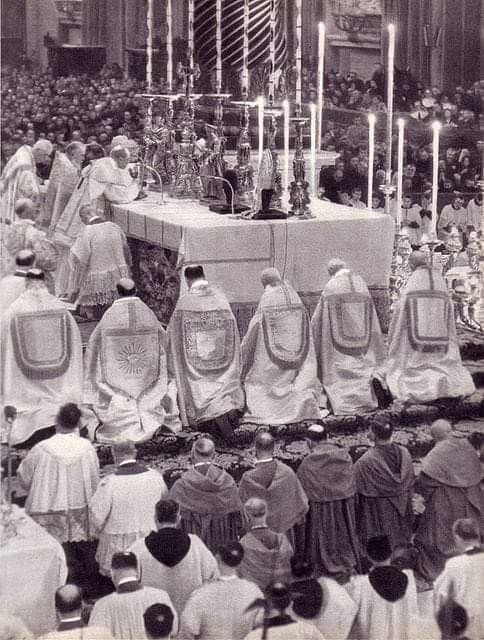
We may also say, with Peter Lombard, that there are six kinds of sin against the Holy Spirit: despair, presumption, impenitence, obstinacy, fighting against known truth, and envy of a brother’s grace.79 These too are seen in the liturgical reform: despair that the faithful could enter fruitfully into the mysteries celebrated in the traditional rites; presumption in thinking to create rites superior to those handed down; impenitence in refusing to repent of and repair the obvious damage caused to the People of God by the scope and speed of the reform, in spite of decades of bad fruits; obstinacy in resisting the prior and authoritative claims of tradition; fighting against the known truth (lex credendi) to which the liturgy (lex orandi) gives expression; and lastly, envy of a brother’s grace, in the form of envy of the Byzantine tradition leading to unintelligent emulations of and mixtures with it.
This liturgy embraced all that I had found in each stage of my journey, yet went beyond them all. It was, and has remained, inexhaustible: an infinite vista opening backward to history, forward to eternity, outward to culture, upward to heaven.
Consider for a moment what charismatics and proponents of a “Reform of the Reform” have in common. Both are seeking authenticity, an encounter with reality, with the divine presence, with the grace of the Holy Spirit. The problem is that both are forms of anthropocentrism: we want to find God on our terms, not on His terms; we want to worship Him in our way, not His way. Be it through excessive emotion or a liturgical rite of our own design, we are bringing God down to our own level, instead of letting Him reach us and take us up to Him along a path He has already provided.
Like Mary Magdalene at the empty tomb, we are looking here and there and everywhere to find Him, when He is standing right in front of us, in His gentle and glorious—though also veiled and mysterious—objectivity.
As we have seen, the result is that the liturgy generally degenerates into reflecting the age rather than speaking to it and sanctifying it. Or more to the point, radical deformations of the liturgy reflect not the face of Christ but the face of the dominant person or clique that imposes them, and so become vehicles not of worship but of narcissism, the cult of self which is the de facto creed of postmodern western society… . We are rootless and thus heartless, replacing self-sacrifice with self-service, with self as the only moral absolute, its inescapable subjectivity and impermanence denying the absolutism it demands for itself. Its secondary absolute, novelty, suffers the same inherent flaw.
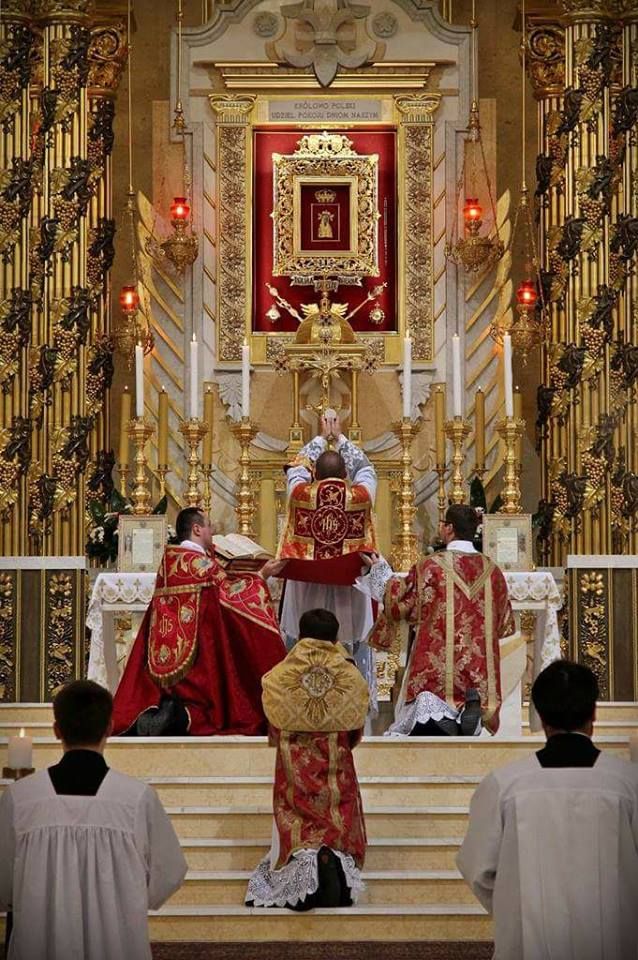
Why do we need not just more beauty, not just more reverence, but above all, the objective content of the usus antiquior? The answer is that God intended us to have it. It was brought forth from the womb of the Church by the Holy Spirit; it was received, practiced, and embellished by innumerable saints as they climbed the ladder of humility to heaven; it was given by Providence with a view to our universal human needs and holy desires; it was, and it remains, a gift of God’s immense love, a fitting throne to receive the greatest gift of all, His Son Our Lord Jesus Christ.
we consider the Novus Ordo to be inherently an inferior form of worship.
The decision, therefore, to re-introduce a wide latitude and choice of options in the neo-Roman liturgy was a blow aimed directly at the traditional understanding and practice of liturgy, a blow against formal, public, objective, ecclesial prayer, and a confirmation of modern voluntarism and liberalism. In other words, the Novus Ordo did not challenge modern man’s hubris but capitulated to his proclivities.
It is the center; put the other way around, one who thinks of liturgy as a human artifact we can freely tinker with in the workshop will sooner or later treat morality as a social construct we can manipulate at will.
When we look with care and piety, we find that what tradition has bequeathed to us is far better than anything we might create on our own, no matter how many “experts” we cram on to a committee and how much papal muscle we put behind them.
Nothing we could ever invent sitting around a table would be able to compare with it for musical inventiveness, structural coherence, aptness of content, scriptural saturation, and integration with the Mass.
The undulating verses of the psalms, chanted in the eight Gregorian tones with their subtly varying terminations and framed by lovely antiphons; the gentle build-up to a chapter, a hymn, a versicle, the Benedictus or Magnificat antiphon, the Gospel canticle, and concluding prayers … Nothing we could ever invent sitting around a table would be able to compare with it for musical inventiveness, structural coherence, aptness of content, scriptural saturation, and integration with the Mass.
The liturgical reform, on the contrary, in the name of accessibility and adaptability to various cultures, Indonesian or Polynesian, Californian or Nebraskan, stripped the liturgy of its own distinctive clothing, ornaments, and symbols of authority, leaving it a naked slave to whatever agenda desired to press it into service.
The hyperpapalist view, popular since around the time of the First Vatican Council, transmogrifies the pope into a “combination Delphic oracle, globetrotting superstar, dynamo of doctrinal development, and standard meter bar of orthodoxy,”22 whose mind and will are, in and of themselves, always right, true, holy, and laudable.
Could we say that a liturgy which is a “compilation made according to pragmatic criteria … handled in a positivist and arbitrary way” is, for that very reason, not an orthodox liturgy? Could we say that any liturgy not “born out of the dialogue of love between the Church and her Lord” but rather assembled by academic experts and avant-garde bishops in dozens of study groups orchestrated by a secretary with decidedly anti-traditional views is not a “living reality,” an “expression of the life of the Church” that “distills the faith, the prayer, and the very life of whole generations”?
Never has it been proved more true that experts are like wells—they are deep in one spot, but narrow and cold—while tradition, home of the common man, is like the ocean— irresolvably vast, incomparably deep, fearful, sublime, teeming with fertility and nourishment, beckoning endless journeys.
Pope Benedict XVI distinguished between mere success, which technique can acquire, and wisdom, which comes only from the assimilation of tradition. The pope quotes Saint Augustine’s description of government without justice as a “highly-organized band of robbers,” in which might is separated from right. The same judgment may be rendered on Bugnini and the Consilium: they assembled plenty of technical expertise, and their finished product was endorsed by the might of the reigning pope, but they lacked—indeed, they repudiated—the wisdom of tradition, and thus forfeited their right to handle the Church’s sacred liturgy.
The fundamental error of modern man is his conception of himself as being so different from what man has been in other periods of history that he considers himself unable to submit humbly to tradition. By subscribing to this error, the modern Catholic bestows on himself a “pass” to step outside the common inheritance of the Church and to create his own peculiar structures, which always flatter his ego and satisfy his passions. His vaunted differentness, which in fact is nothing other than a lack of self-knowledge propped up by a scaffolding of slogans, becomes over time a state of alienation and isolation due to the habitual indulgence of disordered concupiscence.
At last, “the priest speaks to the people.” (But wait: I thought the liturgy was addressed primarily to God?)
Msgr. Ronald Knox’s critique of religious enthusiasm. It is just this hankering for feelings of enthusiasm or excitement that has led to ever-repeated efforts to stir up or stimulate congregations ever since the sixties, with ever-diminishing returns.
The message of the pope was clear: “For your own good, you will participate actively in these various ways—and you will like it!”
“What is really important in the world of doublespeak is the ability to lie, whether knowingly or unconsciously, and to get away with it; and the ability to use lies and choose and shape facts selectively, blocking out those that don’t fit an agenda or program.”
“It is not an arbitrary act. It is not a transitory or optional experiment. It is not some dilettante’s improvisation. It is a law. It has been thought out by [wait for it] authoritative experts of sacred liturgy; it has been discussed and meditated upon for a long time [that is, for a few years of extremely hasty and busy committee work]. We shall do well to accept it with joyful interest and put it into practice punctually, unanimously, and carefully.”
Heraclitus, “you can never step in the same Novus Ordo twice.”
“It is Christ’s will, it is the breath of the Holy Spirit which calls the Church to make this change.
immediate comprehension of “plain language, easily understood, in everyday speech” is the least and lowest sense in which the faithful participate in the awesome mysteries of Christ. Sociologists have pointed out that dense, impenetrable, to some extent off-limits religious rituals are a powerful motivator for belief and devotion.
listening, and what is worse, impervious to words.”33 This observation was made only five years after he had imposed on the Church a liturgy outstanding for its non-stop verbosity, huge doses of Scripture, lack of silence, and paucity of non-verbal ritual.
“Modern man is sated by talk; he is obviously tired of listening, and what is worse, impervious to words.” This observation was made only five years after he had imposed on the Church a liturgy outstanding for its non-stop verbosity, huge doses of Scripture, lack of silence, and paucity of non-verbal ritual.
By November 28, 1971, there are to be no more Latin liturgies from the old missal or even from the new one.
The three addresses of Paul VI discussed above establish beyond the shadow of a doubt that his intention was to see the end of the 1,600-year reign of Latin, the end of the centrality of chant, and the turning of altars “toward the people.” He set the potent example from the throne of Peter; he provided the spurious rationale; he gave free rein to the national episcopacies in their mad pursuit of relevance and accessibility; he acted vigorously to suppress traditional “resistance.” In all these ways, we cannot understand the reformed liturgical books without seeing them through the lens of their maker, governor, and judge.
“All of the differences you are pointing to are incidental; after all, if the consecration happens, it’s the sacrifice of Christ, and the rest is window-dressing.” Often summed up in the trite statement “The Mass is the Mass, after all,” this objection is built upon a neoscholastic reduction of the Eucharistic liturgy to the moment of consecration. This ahistorical and rationalistic reductionism deserves to be rejected because it dismisses the constitutive role of historically articulated tradition in God’s self-revelation to mankind.
It vitiates any notion of identifiable families of rites derived from apostolic churches, with venerable texts, chants, gestures, and ceremonies, handed down within irreducibly distinct traditions of theology, spirituality, and custom that interpret, enrich, and contextualize the sacrificial offering while instructing and nourishing the faithful who take part in it. All of this—the rites, their specific content, and the understanding and way of life that go along with them—deserves religious respect and preservation, in deference toward our predecessors and in charity for ourselves and our descendants.
Reducing the Mass to a valid consecration is like reducing the nuptial act to a successful conception of a child. I sincerely hope no one is foolish enough to define the nuptial act as the conception of a child. The nuptial act is naturally ordered to the conception of a child, to be sure, but it has its own reality, its own meaning, that comprises more than conception; it is an expression of spousal love, which is designed to culminate in new life.
In like manner, the Mass is a privileged microcosm of unitive prayer with a Eucharistic finality.
Prolepsis is a figure of speech that means representing something as existing before it actually does;
Its removal in 1969 was not like a haircut but like the amputation of an arm or a leg; its replacement—a quasi- Jewish presentation of gifts, in which their divine, natural, and human origins are called to mind, and the people respond with a generic acclamation—is like nothing ever seen in Christian liturgical history.
the liturgy is sequential, a sure sign of the influence of Enlightenment rationalism;
Bishop Rob Mutsaerts of ’s-Hertogenbosch put it more succinctly: “We want to be relevant, apparently, at the expense of our own identity.”
the Most Holy Eucharist has been reduced in the minds of many to a mere sign of belonging, foodstuff for the “table of plenty”—not a supernatural mystery that requires the full commitment of one’s mind, heart, soul, and strength to Jesus Christ really present, against whom one mortally sins by unworthily receiving Him.
Faith is a permanent tension between, on the one hand, memory—hoc facite in meam commemorationem, lingering over the life of Our Lord and entering into the transtemporal mysteries of His factual, incarnate, historical life, preserving at every step our bond with what has been handed down—and, on the other hand, looking forward not to a man-made future but to the second coming of Christ from the East. The modern notion of progress is foreign to Christianity—even antithetical to it. As believers, we are always striving to be equal to our past, to be humble and grateful inheritors of it; we are not better than our past, and thinking ourselves to be better will only make us guilty of the sin of pride.
As Michael Fiedrowicz writes: Even the highest authority of the Church may not change at will the ancient and venerable liturgy of the Church. This signifies an abuse of power (abusus potestatis). The authority of the bull of promulgation Quo Primum is especially grounded in the fact that here a pope regulated the liturgy in the exercise of the fullness of his papal power and in complete consensus with the vote of an ecumenical council, and in addition, he found himself in accordance with the unbroken tradition of the Roman Church, as well as—regarding the fundamental parts of the Missal—in accordance with the Universal Church. Above all, the fact that the Missale Romanum of 1570 was intended to be the most perfect liturgical expression of the Catholic teaching on the Eucharist, as the Council of Trent had defined it for all times over against Protestant errors, is a significant argument that the Missal itself, as well as the dogmatic definition of Trent, should endure in this world, a time must come when tradition is vindicated
The infallibility of the pope does not mean in any way that he enjoys unlimited and arbitrary power in matters of government and teaching. The dogma of infallibility, while it defines a supreme privilege, is fixed in precise boundaries, allowing for infidelity, error, and betrayal. Otherwise in the prayers for the Supreme Pontiff there would be no need to pray “non tradat eum in animam inimicorum eius” [that he may not be delivered into the hands of his enemies]. If it were impossible for the pope to cross to the enemy camp, it would not be necessary to pray for it not to happen. The betrayal of Peter is the example of possible infidelity that has loomed over all of the popes through the course of history, and will be so until the end of time. The pope, even if he is the supreme authority on earth, is suspended between the summit of heroic fidelity to his mandate and the abyss of apostasy that is always present. —Roberto de Mattei The law of prayer is the law of faith: the Church believes as she prays.
It was and is a crime for Church leaders to treat the Church’s tradition in such a contemptuous way; it was and is an incalculable loss for the spiritual vitality and sanctification of her members; it was and still is the principal cause of the crisis of faith through which we have been passing in the decades since the Council.
No matter how valid a new sacramental rite may be, no one can create for it a history ex nihilo, no one can make it to be a treasure handed down when it is not. No matter how valid it may be, if it is defective in regard to the way of worship, it will be defective also in leading people to the end of worship.
A liturgical rite is constituted by its particular texture and content of chants, texts, ceremonies, the language it has made its own, the stance of the priest, the motions of the ministers, and so forth. These things are not supplementary to or decorative of the liturgy; they simply are the liturgical rite.
For it is possible to have a Novus Ordo celebration in which almost nothing said and done is held in common with what is said and done in the Roman rite as it historically existed: one can have different proper antiphons (or none at all), different orations, different readings, a different anaphora, the contrary stance of the priest, etc.; and even if all of the “right” options were chosen, they remain essentially “at option” and thus not inherent and constitutive of the rite.
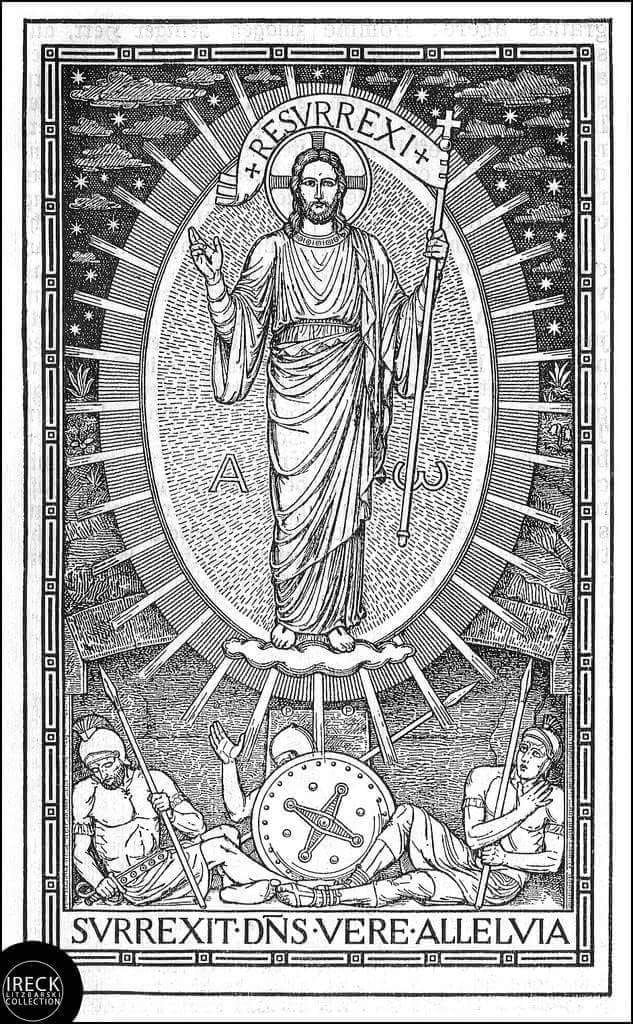
It spread by its own inherent rightness, its superiority over what had been done before.
the architectural boundaries and barriers that turn spaces into symbols, and the entrustment of rites to men who exemplify the worship of God in their ceremonial vesture, scripted words, and carefully-controlled motions. In other words, a phenomenon that is routinely assumed to be anti-participational and anti-corporate is nothing of the kind.
Yet they fail to grasp the paradox—frequently experienced by attendees of the traditional rites—of the intense spiritual involvement, attraction, and even fascination provoked by the hieratic “distance” of the clergy in the sanctuary, the architectural boundaries and barriers that turn spaces into symbols, and the entrustment of rites to men who exemplify the worship of God in their ceremonial vesture, scripted words, and carefully-controlled motions. In other words, a phenomenon that is routinely assumed to be anti-participational and anti-corporate is nothing of the kind.
What happened in Paul VI’s reform was more like planting a new tree that looks a bit like the old tree and then building a wall to keep people away from the old tree.
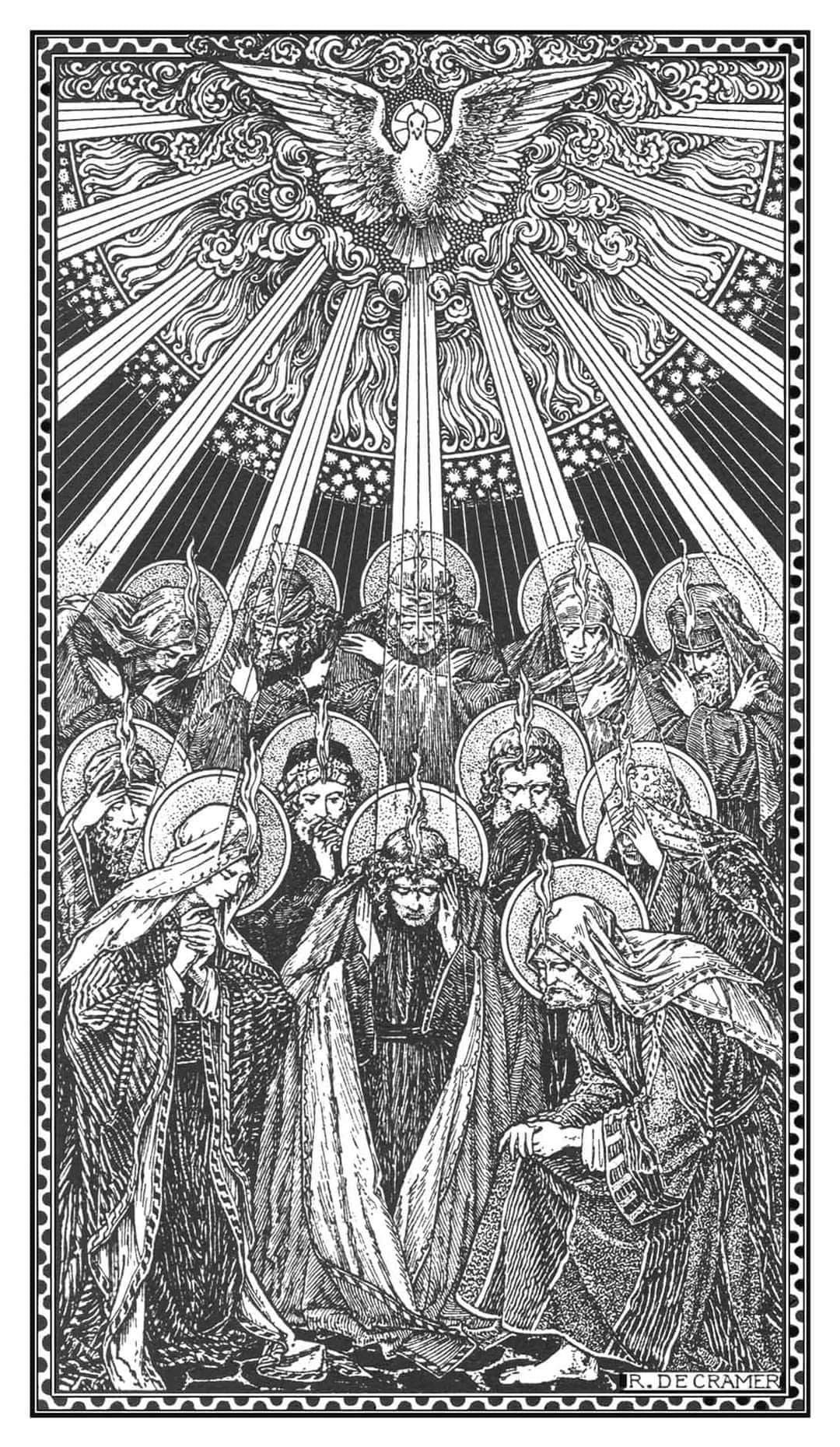
Both regarded the post-Constantinian history of the Catholic Church as one of progressive darkening and pagan relapsation, a deviation from the pure, simple, authentic springtime of the early Christians who met in homes to “break bread” and remember Jesus, the wonder-working carpenter from Nazareth. This deviation, according to such reformers, reached its nadir in the Middle Ages, which then transmitted a superstitious cult to succeeding centuries, embellished along the way by the courtliness of the Baroque, until the clericalist dumb-show known as the Tridentine Mass achieved maximum rigidity. The fiery breath of the Pentecostal spirit melted this paradigm and replaced it with forms of worship more in tune with the living faith of Christians: first in the Reformation, then, much later, in the period of Vatican II and the sweeping reforms it ushered in.
Guéranger nicely identifies the irony that those who claim to be reviving a pristine liturgy are, in fact, creating a new liturgy that never really existed and certainly has little in that sense, a pure novelty that loses all the benefits of ageless and anonymous antiquity!
It is, in that sense, a pure novelty that loses all the benefits of ageless and anonymous antiquity!
History is, in that sense, irrelevant, except perhaps as an empty space within which conversions or charisms can happen, causally linked (if at all) by the conjunction of a preacher and his audience. The Catholic, on the other hand, sees the Faith as an historical, social, visible, incarnate reality, living a life that develops and unfolds, and that retains its earlier phases within itself while it grows beyond them.
In other words, their conception of faith is not the incarnational and pneumatological confidence in the unfolding of tradition that Catholics have always held, but, like Protestants looking for the stirring up of the heart in the revival tent meeting, they bring to bear a set of subjective criteria based on what they deem “effective” or “relevant.”
When a pope prioritizes environmental ethics, gives interviews to atheist-communist journalists, and eviscerates Scripture of its supernatural sense, we are already looking at the frightening prospect of a Church of Latter-day Socinians.
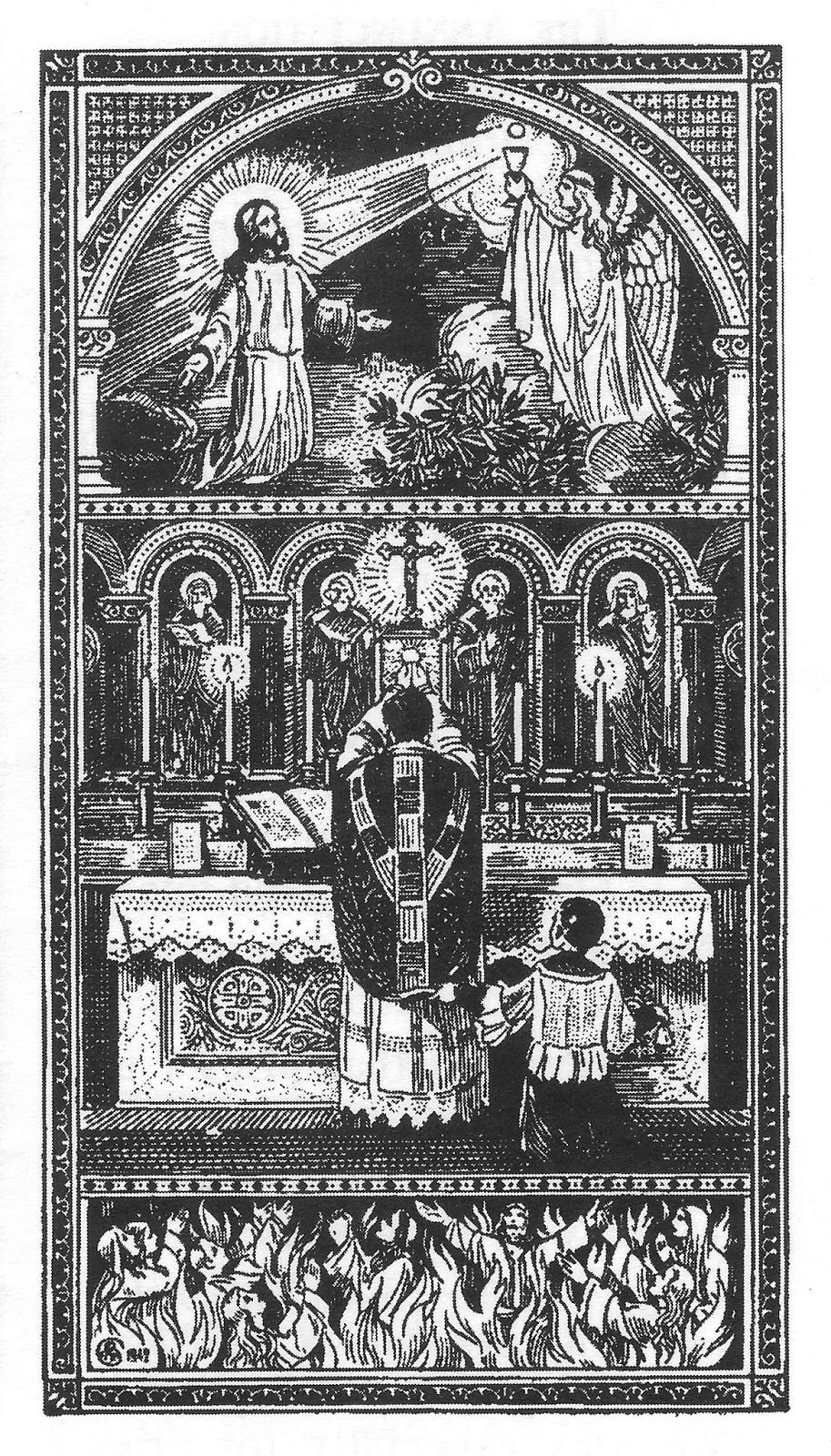
This mutation of Catholicism from its dogmatic-liturgical essence to a loosely-defined moral therapeutic deism in symbolic pantomime has happened, is happening, and will continue to happen for as long as the Protestant distrust of incarnational ecclesiology and the Modernist skepticism of divine revelation and apostolic tradition continue to exercise their sway in the Vatican, the academies, the chanceries—and upon the altars of our parishes.
There is, however, a solution for the Church of the Latin Rite, a solution as obvious as it is demanding: to leave behind the faux ancien, crypto-Protestant, congenitally modern25 papal rite of Paul VI and to return confidently, totally, and exclusively to the Tridentine liturgy—rich fruit of a continuous, organic, millenium-striding, providential, and Pentecostal development.
The Roman Canon was, and was always seen as, an apostolic heritage to be lovingly received, jealously guarded, and diligently handed on.
All of these goods are gifts from God, who may, in His wisdom and justice, deprive the Church on earth of the enjoyment of these goods if the faithful or their rulers should be so unfortunate as to be lukewarm in performing the opus Dei, or worldly in their attitudes, or cowardly in their preaching.
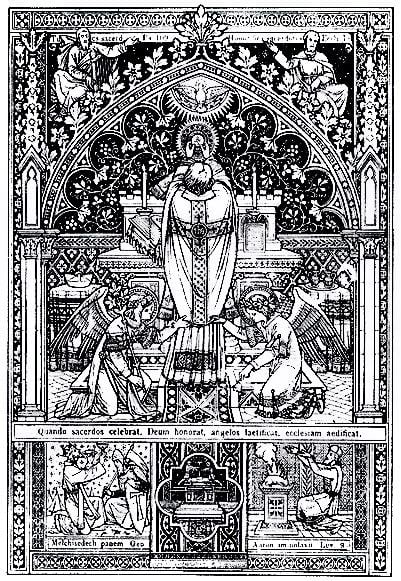
The story of how the words of consecration spoken over the chalice were changed for the Novus Ordo Missae is a potent exhibition of many interrelated problems characteristic of the liturgical reform in general: false antiquarianism; a defective understanding of participatio actuosa; an infatuation with Eastern praxis coupled with a contempt for what is uniquely Western; disdain for medieval piety and doctrine; a lack of humility in the face of that which we cannot fully understand and a lack of reverence for that which is mysterious; a mechanistic reduction of liturgy to material that we can shape as it pleases us (as we try to do with the natural world using our modern technology); and an impatience to construct new forms due to boredom or discomfort with old ones.
The reform of the Mass has fostered a profoundly anti-religious attitude among Catholics. Christian worship is no longer a gift of grace that is to be received on one’s knees; instead it is a commodity that must be met with mistrust and ill-will, then tested, and often enough rejected. Holy Mass, which formerly was a hermetically closed mystery, had now to open itself up to the confusion of opinions. What previously had been venerated as a super-terrestrial phenomenon is now seen to be something manufactured, something arranged. And what can be arranged, can be rearranged. Now there can be no end of arranging! Anyone can come up with good ideas for changing the liturgy. It is strange, however: the more the Mass